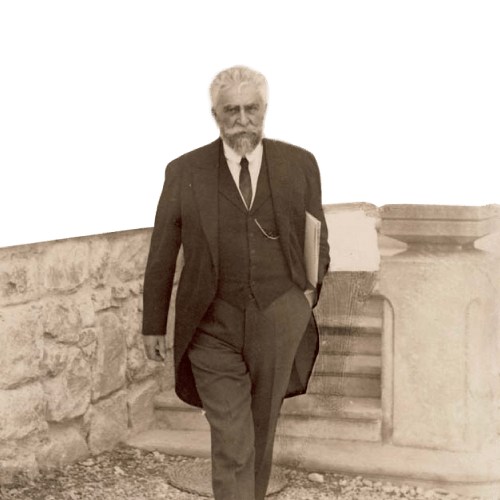
The history of Romanian photography could boldly be divided as before and after Berman. Almost unknown outside the borders and not as famous even within, his fellow colleagues, journalists such as Geo Bogza or Brunea-Fox would call him “the master of photo-reportage”.
Iosif Berman rejected the inflexibility and programmatic character of his predecessors, which would photograph in the studio, in a rehearsed pose and aligned, neat set-up. His energy was close to that of the avangardes, in the way he teared down the wall between photographer and subject.
He used to shoot with “Contessa Nettel” and “Plaubel Makina”, which were either the main hero in a photo, as the subjects would look directly into the camera, or the hidden observer, as he used to enjoy getting lost in the crowd.
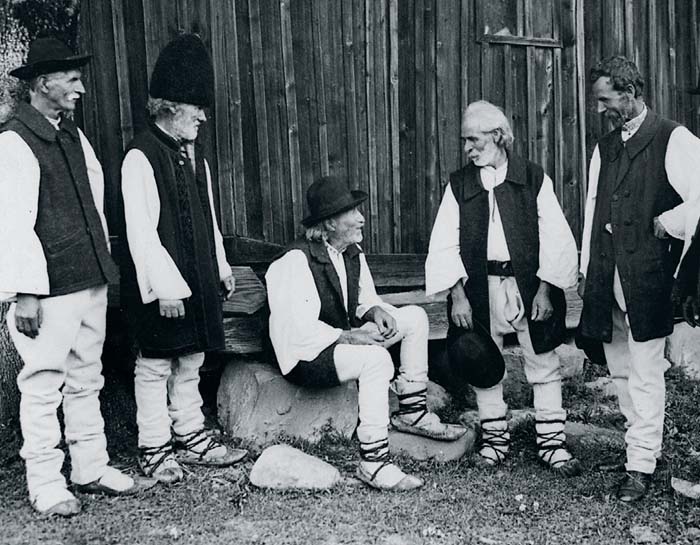
Iosif Berman was impressed with the ethnic diversity of Romania, but didn’t fall into the trap of a simplistic, touristic photography. He was enchanted by Carpathian nature but he rarely tried to capture it on film. He was fascinated by peasants, but with his non-judgmental, human approach he did not impose any kind of ideological construct on their photographic representations.
Romanian couples are tied with a double knot. National Geographic US, April 1934.
From Henrietta Allen Holmes’s feature article “The Spell of Romania: An American Woman’s Narrative of her Wanderings Among Colorful People and Long-Hidden Shrines”.
Law prescribes a civil ceremony before the church wedding can be performed. Here an Oltenian peasant bridegroom in a straw hat leads his bride before the mayor, the smiling young man standing at the far end of the table and wearing the official scarf. Two peasant friends sign as witnesses. The next stop is the church, where the priest will marry the happy pair again.
From Henrietta Allen Holmes’s feature article “The Spell of Romania: An American Woman’s Narrative of her Wanderings Among Colorful People and Long-Hidden Shrines”.
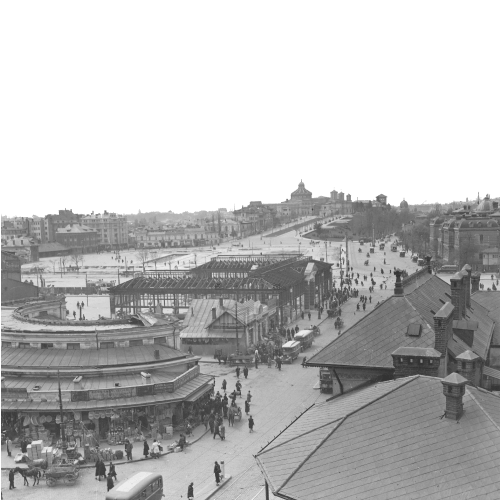
Iosif Berman lived under the sign of the eye and of the heart. The camera would cut out pieces of the world just like the photographer loved them: lively, populated.
“The human being was impersonal unless set against a background containing a piece of reality, a building, a fountain, a street. The camera-eye was generally indifferent to places devoid of moving people, animals or birds (…) He loved the city, yet never devoid of its people, from the colour it received from the markets and streets crowded with Gypsies, Jews, itinerant children actors or sellers, old handicrafts men, villagers coming to the town fair, vehicles of the time.”
( Revista Martor, nr 3, Supliment, Ioana Popescu, ”Iosif Berman- a photo album” )
The way in which the subjects relate to each other, to the environment, even to the photographers is the main subject of Berman’s images. We see winks, micro-gestures, gazes that invite us, incite us, that render a corporality to the relationships captured in the images and make us, the viewers, part of the action.
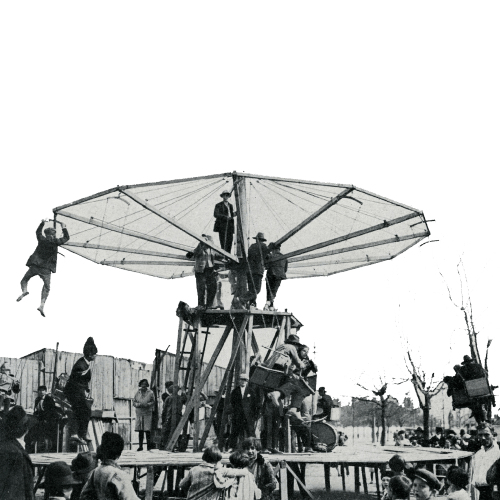
Berman’s photos depict micro-histories, daily, habitual occurences, micro-universes of regular people, tiny glitters of magic within the dialy life, either in the center of the city or in the outskirts.
The photographs seem to have sonority: the movements of the lips, of bodies, the street musicians, the street merchants create a sound imaginarium for the viewer.
Iosif Berman. Lunch in Pustnicu Forest, July 1937.
He contradicts the inherent stillness of photography through the dinamism rendered by asymetric framings and powerful diagonals. He replaces the overused frontal perspective with a lateral or plunging one. Berman is the first to dare to shoot corteges from behind and, hence, introducing us, viewers, in the queue.
Similar to other artists that defined modernity, such as Caravaggio or Proust (a much earlier modernity in their countries), Berman doesn’t resist either to the tentation of observing himself observing the world.
Often, we might notice in his photographs a subject talking directly to the camera man. Self-observation has, for Berman, the same detachment, the same objectivity as the process of observing the world. This aspect is represented again through relationality, for example through a „hidden” gaze directly in the camera, from one of the secondary subjects, who seems to spy us, to see if we saw him to.
It's all a play of gazes.
Main themes
There are 4 main themes in Iosif Berman’s photography, that intertwine throughout his career.
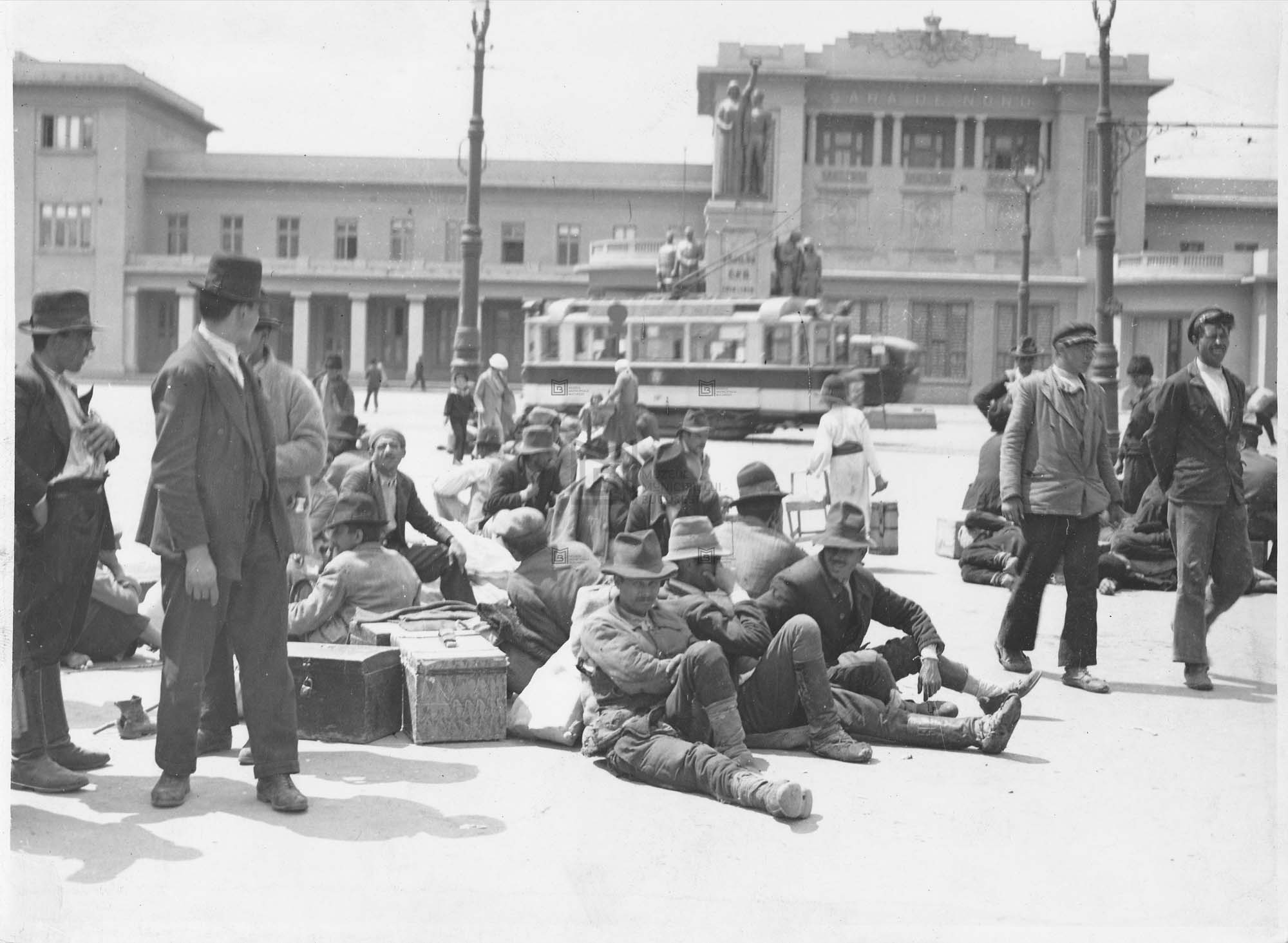
1. Humans of the cities
often through his official collaborations, but also out of his passion for marginalities.
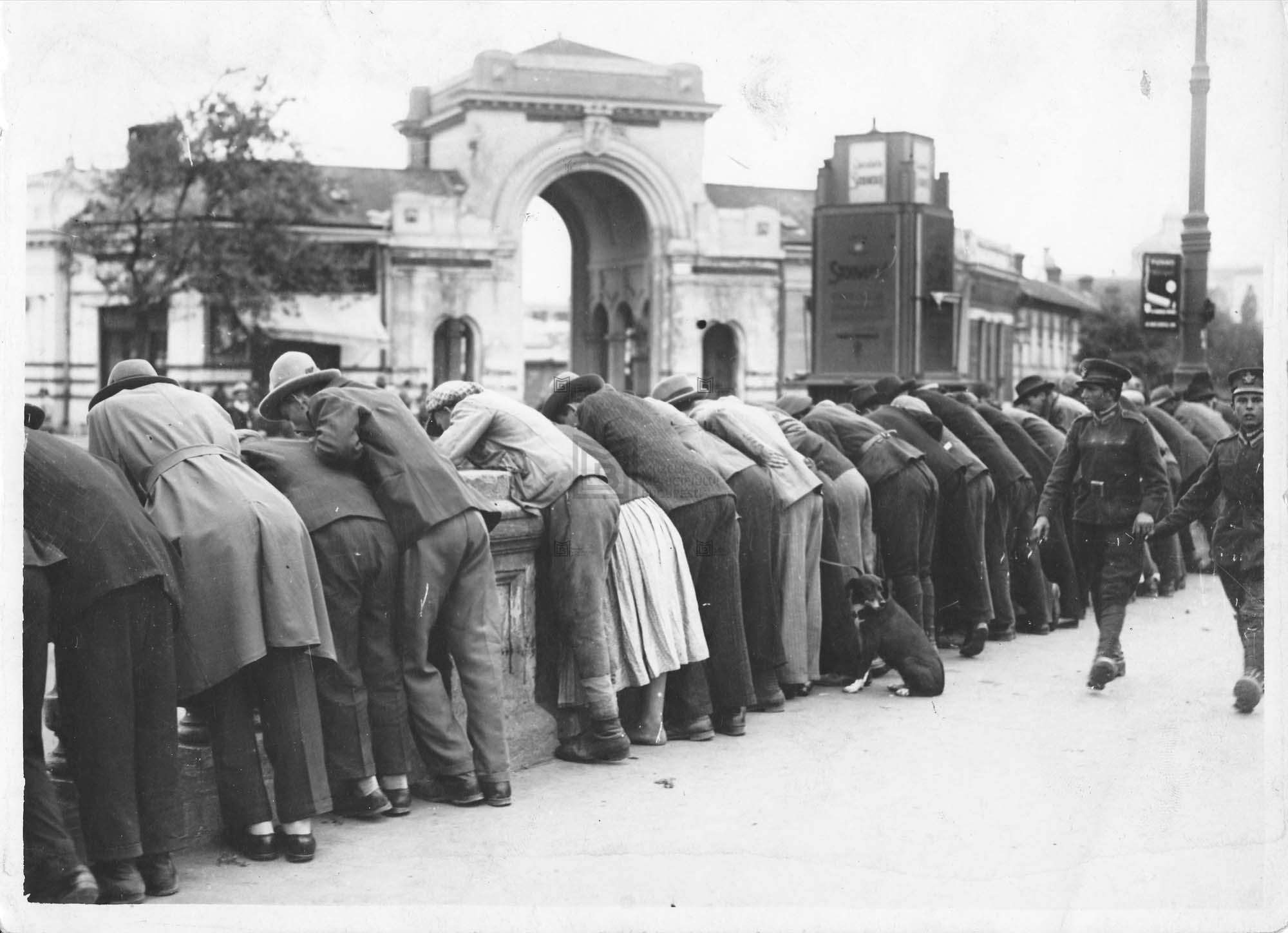
Unemployed people on the bridge in front of the Brâncoveanu Hospital (Spitalul Brâncovenesc), 1933
3. Emotional-domestic
photographs of Raisa, Luiza and Matilda, whom he loved immensly and photographed often. They are today part of „Luiza Berman” Collection, conserved by Mrs. Adina Stefan and you can see some of them in the album „Iosif Berman’s Romania”.
4. Official and political
taken as one of the official photographers of the Royal House.
The images are correct, neutral, without any visual tricks to instill the cult of power. He doesn’t use low angles to underline the importance of the king, neither does he minimize them.
Iosif Berman, photograph sent to „Associated Press” considering the backside stamp.
Celebrating the Union in Bucharest. At the Celebration of the Union, the 8th of June is dedicated to the watchmen, who are here saluting the major commander ,, His Majesty King Carol II of Romania, on the „Prince Carol” stadium. The photo depicts his Majesty King Carol II surveying the troups, together with the watchmen commander. In the stands there are 30.000 spectators, despite the rainy weather.