The 20th century countryside in Romania brimmed with life, with profound meaning and also fun. Iosif Berman was one of the main photographers involved in Dimitrie Gusti’s extensive ethnographic research.
His keen eye that managed to capture life itself in his photos was so highly esteemed by Gusti that he even wrote to Berman, in one letter before their ethnographic campaign in Cornova (Basarabia, 1931):
“Dear Mr. Berman, please, I ask of you, leave tonight for Cornova! You owe us this trip! Our rich works, as you know, are compromised because they don’t have the documentary photography (…)
It is mandatory to be there on Sunday, so leave tonight. You know that on Sunday the village lays in your palm. (…). We count on your friendship. Without your consent, you compromise our entire work! And it’s a shame! Isn’t it you’ll leave tonight?
I thank you wholeheartedly and I shake your hand with old friendship!” Dimitrie Gusti
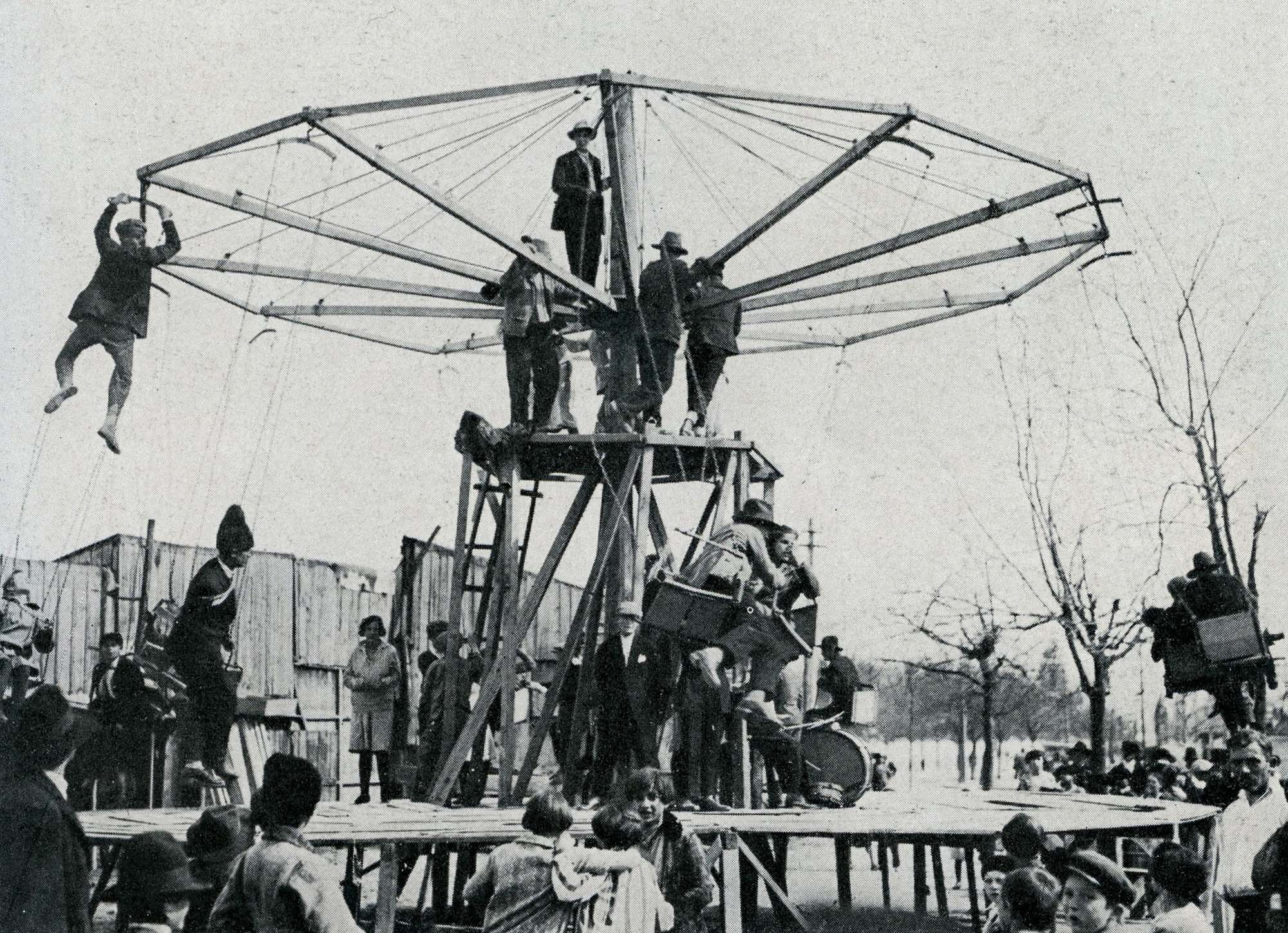
A ROMANIAN BOY-POWERED MARRY-GO-ROUND
The author saw it while traveling along the lower Danube near Ismail. Husky youngsters on the platform overhead supply the motive power. Most of the children of the town, and even a grown-up or two, stand about waiting for their turn to ride.
Collection: National Geographic US, April 1934
ENJOY THE PHOTOS
The following photographs were published in April 1934 in National Geographic, in a long read material by Henrietta Allen Holmes titled “The Spell of Romania: An American Woman’s Narrative of her Wanderings Among Colorful People and Long-Hidden Shrines”.
Berman was the first Romanian to have his photos published in the famous magazine, no less than 32 pieces.
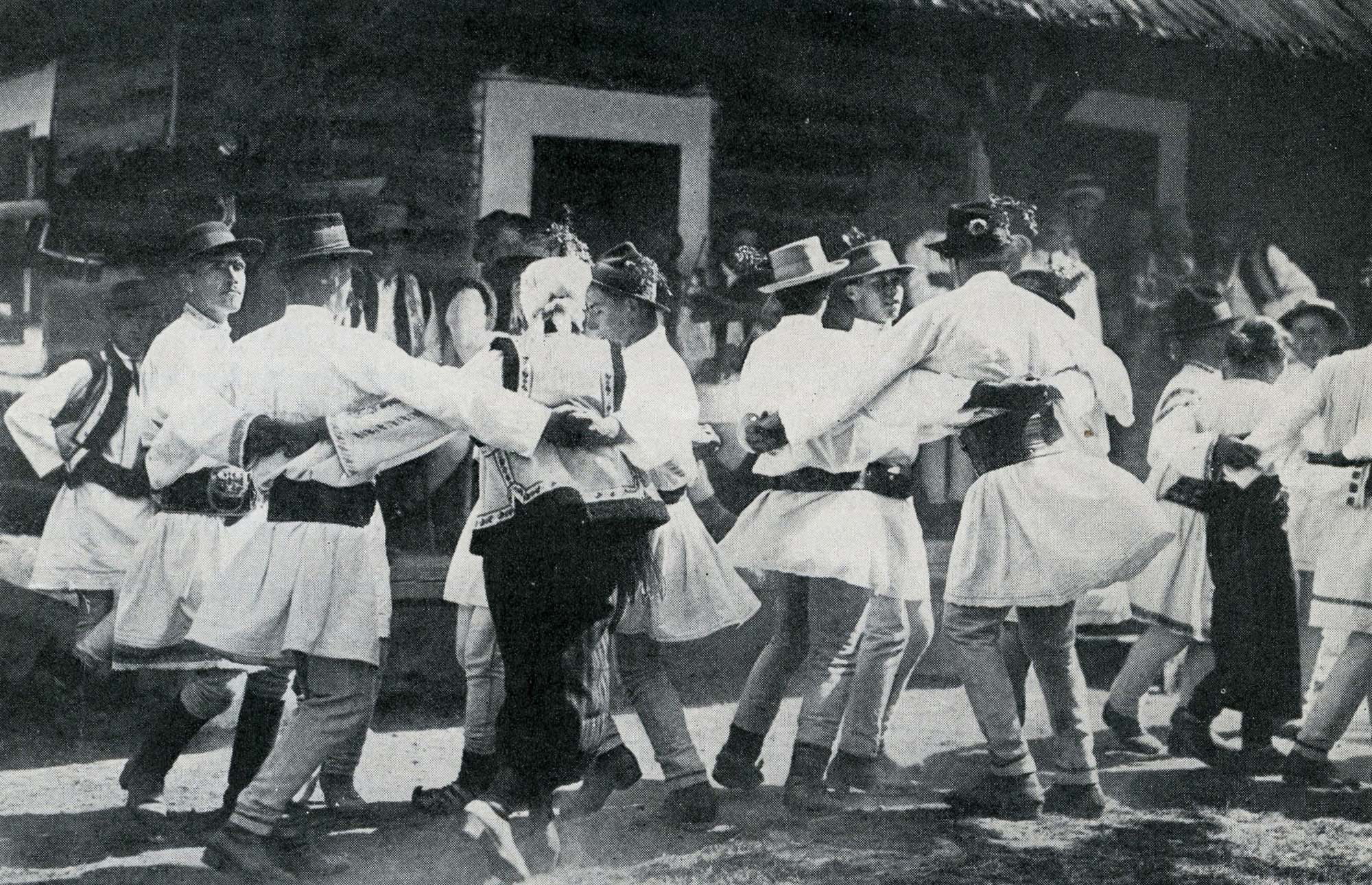
SWING YOUR PARTNERS IN THE GAY `BATUTA`!
On a fête day in the Carpathians, peasants enjoy a popular dance considerably more rapid than the measured movements of the hora. “She dances at the dance” is a peasant way of saying a young woman has reached marriageable age. In this case there is a decided dearth of girls.
Collection: National Geographic US, April 1934
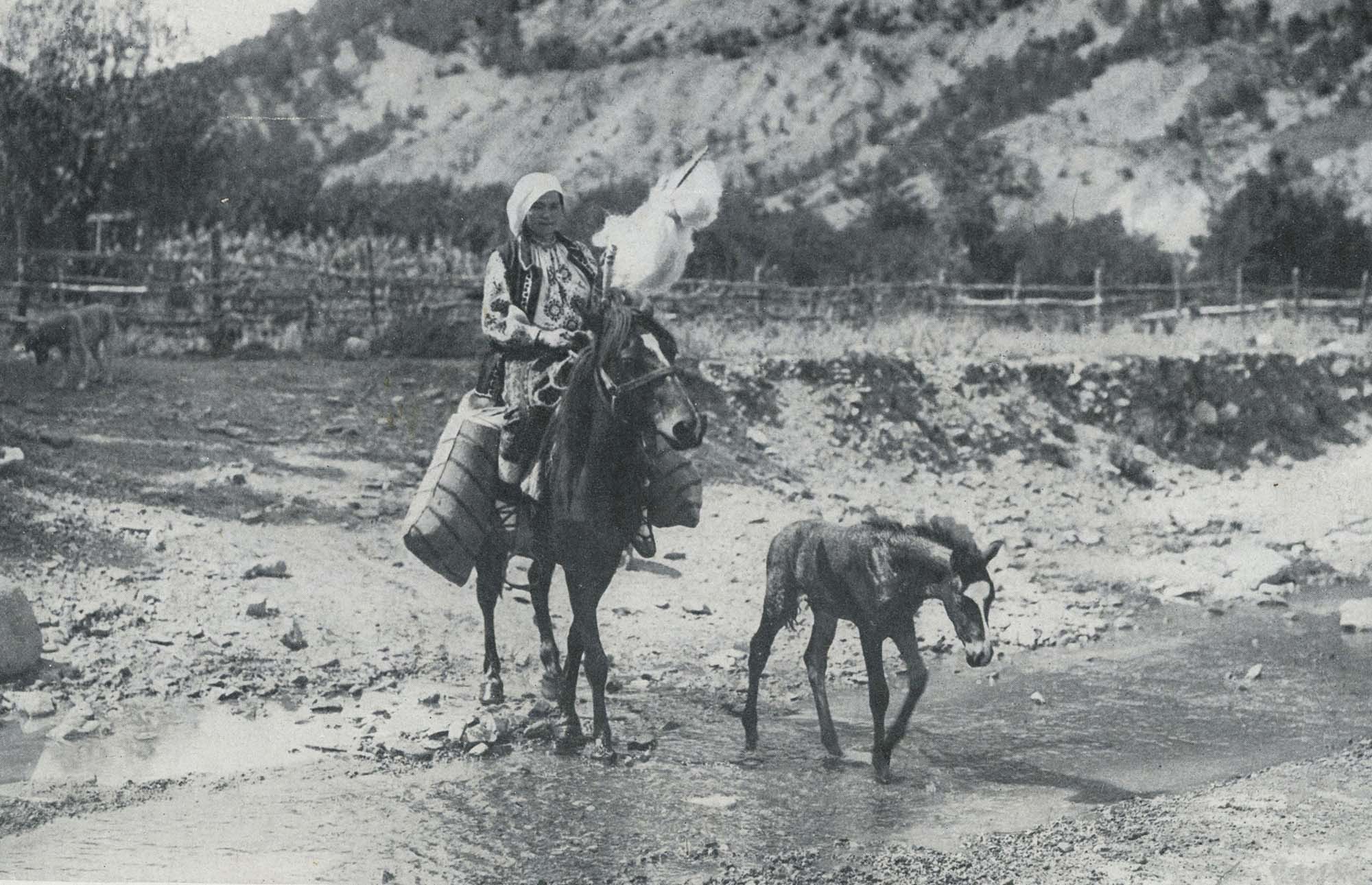
EVERYWHERE THE MARE WENT THE COLT WAS SURE TO GO
It followed her to the market one day – through the southern Carpathian foothills, in the Old Kingdom of Romania. The woman astride her small mountain pony has brought the inevitable mass of wool and she spins worsted as she rides.
The saddlebags bulge with butter, cheese, and fruit to be sold in town.
Collection: National Geographic US, April 1934
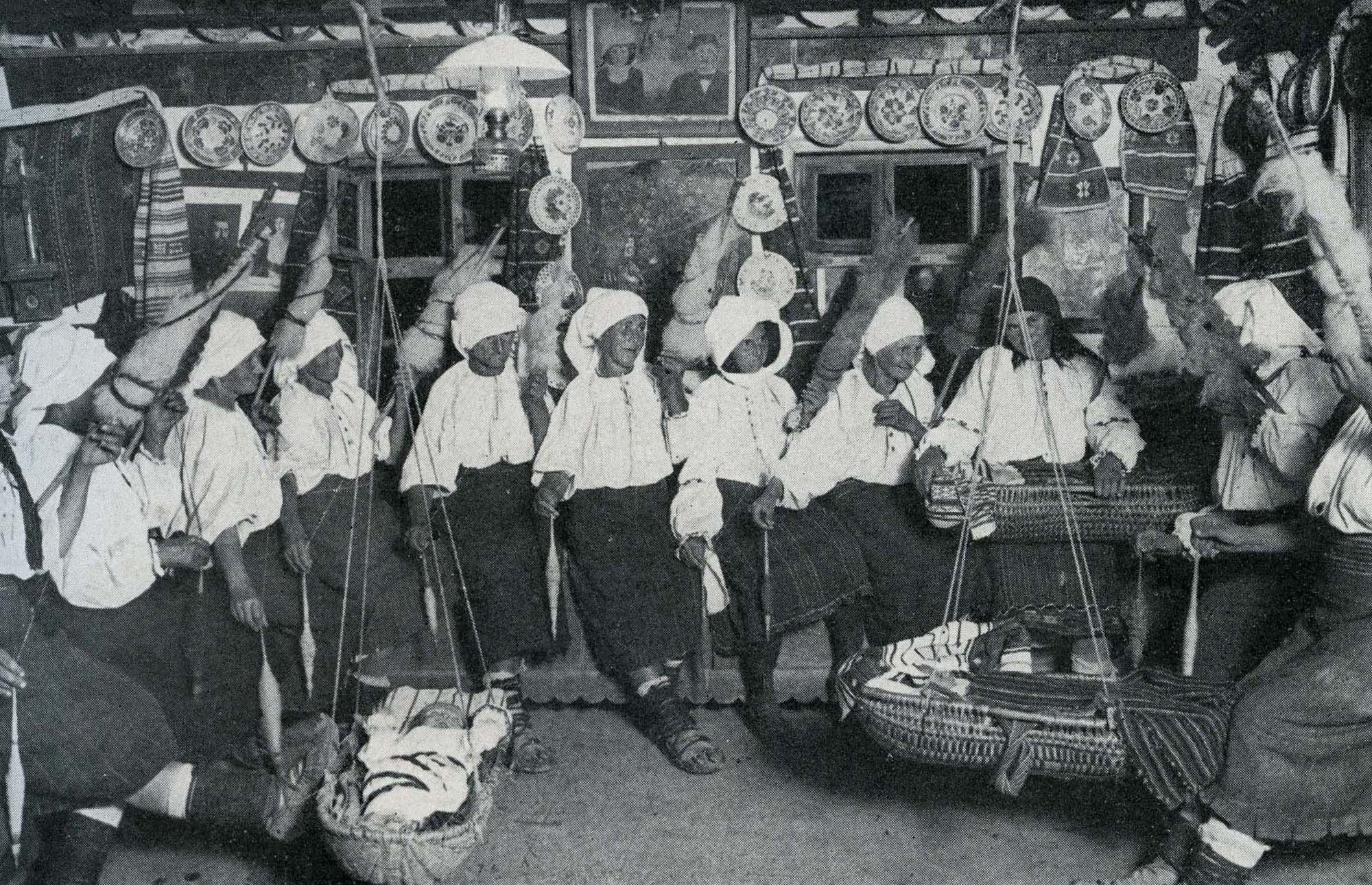
BABIES SHOULD BE SEEN AND NOT
Mothers bring them along in the evening and keep them quiet by gently swinging the suspended cradles with practiced foot. Proudly displayed in this peasant guest room is a picture of relatives who emigrated to the United States and prospered.
Collection: National Geographic US, April 1934
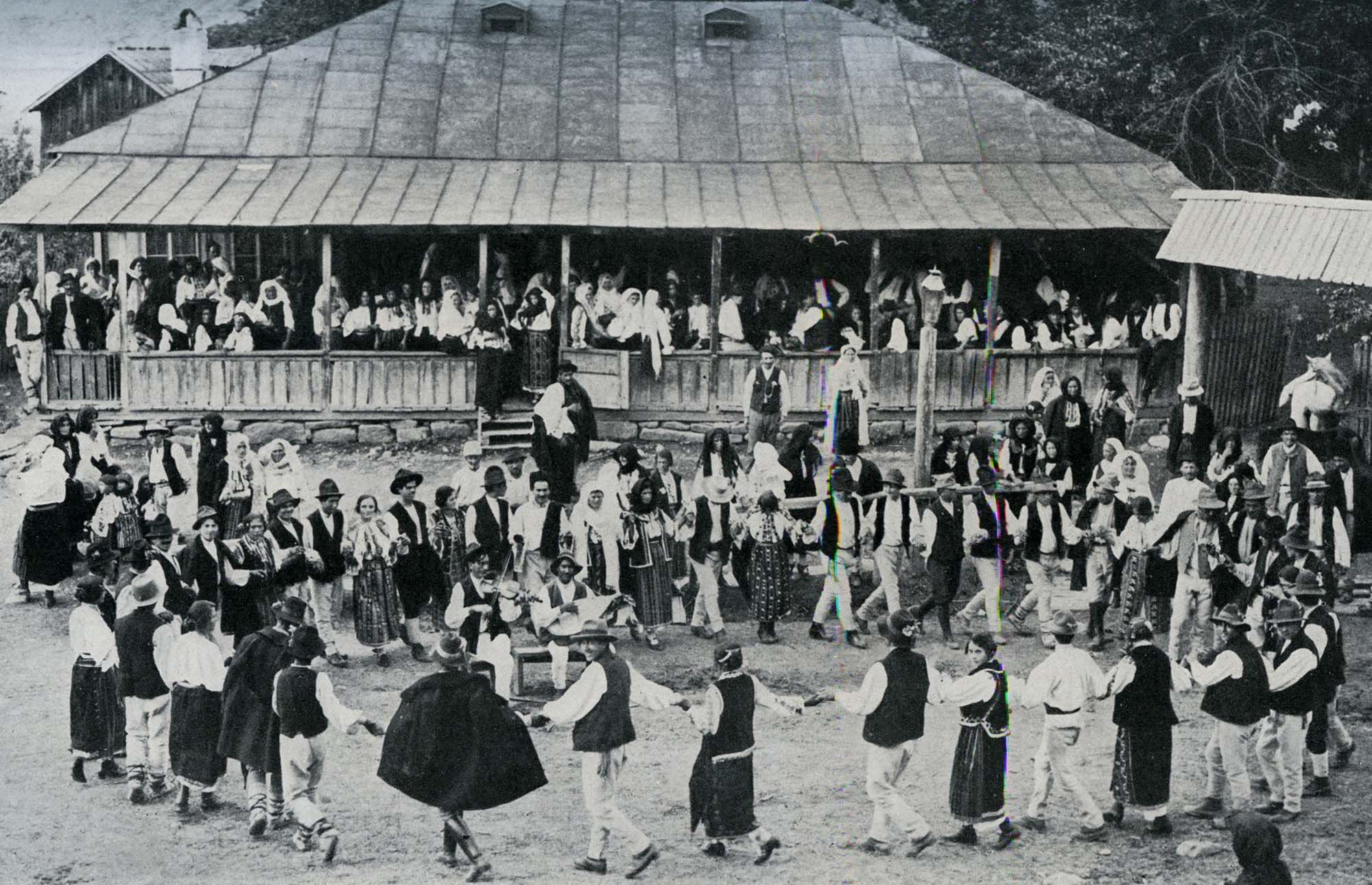
PEASANTS SAY THEY “DANCE ON SUNDAY TO KEEP THE CREAK OUT OF THEIR BONES ON MONDAY”
Whole villages assemble after church, the young people to tread the rhythmic measures of the hora and their elders to look on. This ancient national dance of Roman origin, which sometimes continues for hours, seems a cross between a slow jig and a game of ring-around-the-rosy.
Joining hands, the participants go through a stepping, swaying motion to the music of a fiddle and guitar.
Collection: National Geographic US, April 1934
IF YOUR BACK ACHES, BRUIN WILL DANCE ON IT
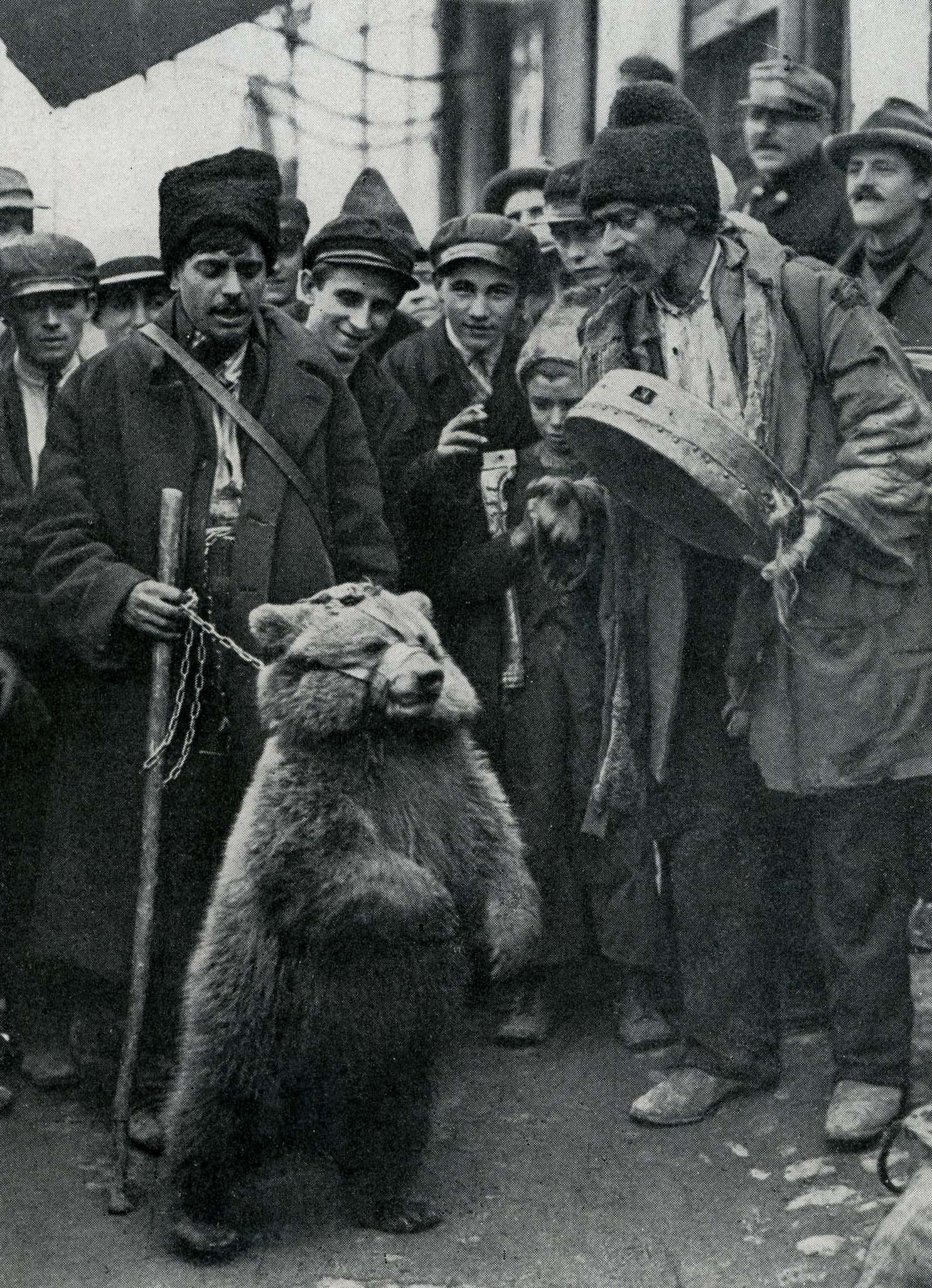
Gypsies teach their dancing bears to massage the muscles of poor people, weary from working all day in the fields. The patients lie flat on the ground and seem to enjoy Dr. Bear’s somewhat heavy-footed treatment. While a policeman (upper right) keeps an eye on the group, one of the itinerants beats time with his hand-made drum and his partner handles the well-muzzled performer, to the delight of a crowd of youngsters in high-school uniform.
Collection: National Geographic, 1934
More photographs from Dimitrie Gusti's ethnographic campaigns and various other countryside moments to come soon.